
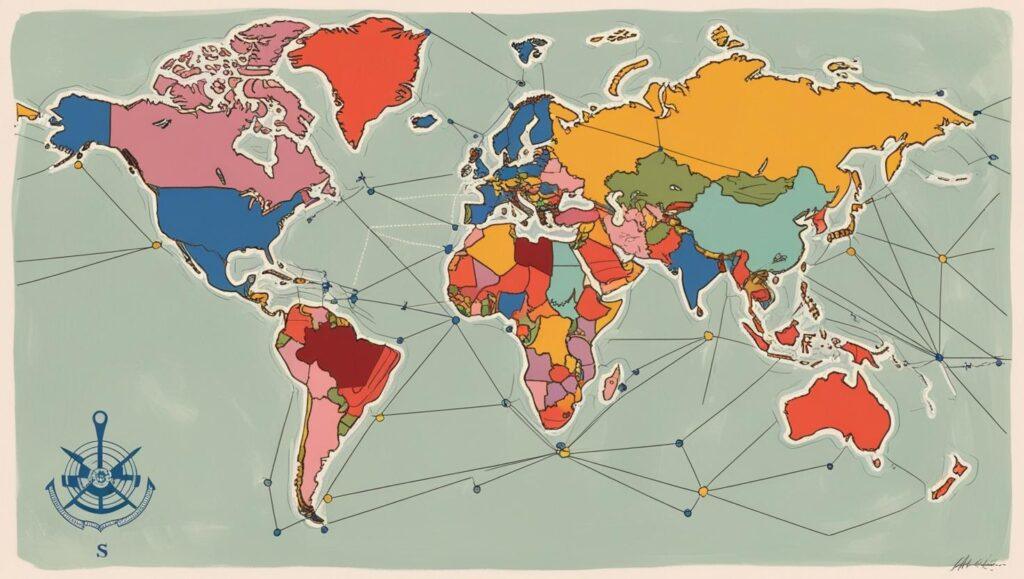
As the world hurtles into an era defined by rapid technological change and geopolitical tension, the moral compass guiding global decisions appears to be tilting dangerously inward. Nations, leaders, and individuals are increasingly motivated by self-preservation, personal gain, and tribal identity over collective well-being. In this high-stakes moment, ethics in geopolitics is no longer a philosophical luxury—it is a survival imperative.
The Rise of “Me” Over “We”
Today’s geopolitical landscape is marked by a troubling shift: decisions once guided by diplomacy and a shared vision of peace are now driven by short-term nationalistic gains. Countries are staking territorial claims, escalating military presence, and weaponizing economics, all in the name of self-interest. The deeper danger lies not just in the actions themselves, but in the mindset behind them: *a world where “me” triumphs over “we” breeds mistrust, fragmentation, and ultimately, war.*
While it is reasonable for nations to prioritize the well-being of their citizens, this should not come at the cost of global stability or human rights. When one country’s survival strategy endangers another’s, the ethical balance is broken. The planet is not a battlefield to be divided among the strongest, but a shared home whose peace depends on cooperation, restraint, and moral clarity.
The Land We Stand On—and Fight Over
At the heart of many geopolitical crises is the battle over land—whether in Eastern Europe, the South China Sea, or the Middle East. Territorial disputes are often framed as matters of sovereignty and historical entitlement. Yet in a world bracing against climate change, pandemics, and nuclear risk, *land disputes must no longer be resolved through force but through intelligent, peaceful negotiation.* Fighting over land in the 21st century is not only outdated—it’s existentially reckless.
The question we must ask is not, “Who deserves this land?” but rather, “What preserves peace?” The higher ethical ground lies not in domination, but in restraint, diplomacy, and a global commitment to non-violent solutions. Humanity simply cannot afford another world war.
AI Ethics and Geopolitics: The Invisible Battlefield
Just as geopolitical decisions shape the physical world, artificial intelligence is beginning to shape the moral architecture of our digital and cognitive world. But here, too, ethical challenges arise. Countries are in a technological arms race—not only to develop the most powerful AI systems but to control their global standards, surveillance power, and warfare potential.
Without international cooperation, AI could become a new kind of geopolitical weapon: one that automates propaganda, destabilizes truth, or even launches autonomous strikes. *Ethical AI governance is thus a geopolitical issue.* It requires the same collective mindset we are currently lacking: putting human dignity and planetary stability above power and profit.
Nations must collaborate on AI standards that uphold privacy, fairness, transparency, and peace. And just as in geopolitics, the question should not be, “How can we use AI to dominate?” but rather, “How can AI help us serve humanity as a whole?”
A Call for Moral Leadership
This is a pivotal moment in history. The choices made now—by governments, corporations, and citizens—will either escalate conflict or build a more ethical world. To avoid a path that leads to World War III, the world must embrace moral leadership rooted in humility, empathy, and shared responsibility.
Yes, national interests matter. But *they must be balanced with the global good*. Ethics in geopolitics means standing for peace, even when it’s inconvenient. It means rejecting manipulation, refusing war as a solution, and guiding technological power with human-centered principles.
It’s time to rise above our selfishness—not as a naive ideal, but as the only strategy that ensures survival.
Let us ask not what credit we can take, but what contribution we can make—to world peace, to our shared future, and to the generations who will inherit what we choose today.
Leave a Reply